
Why Fitness Plateaus Are Actually Speeding Up Results

Why Fitness Plateaus Are Actually Speeding Up Results
Fitness isn’t something you stumble into by accident. You make a choice every single day to move forward or stay stuck. Most men know what they should do but never actually do it. The difference between results and frustration is having a plan that fits your actual life.
Why Fitness Matters More Than You Think
Your body adapts to whatever you ask of it. Sit all day and it gets weaker. Move with purpose and it gets stronger. This isn’t about aesthetics alone. Fitness determines how you feel when you wake up. It shapes your energy levels throughout the day. It affects your mood, your sleep, and your confidence in ways most people never connect.
Men who train consistently report better focus at work. They handle stress more effectively. They sleep deeper and wake up feeling ready. These aren’t small perks. They compound over time into a completely different quality of life.
The biggest mistake is thinking fitness requires hours of daily commitment. It doesn’t. You need consistency over intensity. Three solid training sessions per week beat seven half-hearted attempts. Your body responds to effort applied regularly, not to bursts of motivation that fade.
How to Start a Fitness Routine That Actually Sticks
Start with movement you can repeat without dread. If you hate running, don’t run. Find something that feels tolerable at minimum. Lifting weights works for many men because progress is measurable. You add weight to the bar and watch strength increase. That feedback loop keeps you coming back.
Your first month should focus entirely on building the habit. Don’t worry about perfect form or advanced techniques yet. Just show up. Train on the same days each week at the same time. Your brain learns patterns through repetition. Make it automatic before you make it complicated.
Most beginners pick programs that are too aggressive. They burn out within weeks. A better approach is starting with three full-body sessions per week. Each session hits major movement patterns: push, pull, squat, hinge. You can build serious strength with just those basics for months before needing anything fancier.
Fitness Training Mistakes That Kill Your Progress
Skipping warmups is the fastest way to guarantee an injury. Cold muscles don’t move well. Joints need preparation before heavy loads. Spend five minutes doing light movement and mobility work before every session. Your body will thank you by staying healthy enough to train consistently.
Another common error is chasing soreness instead of progression. Soreness doesn’t equal growth. It just means you did something your body wasn’t used to. Real progress shows up when you lift more weight, do more reps, or complete the same work in less time. Track those metrics instead of how sore you feel the next day.
Men also tend to ignore recovery completely. You don’t build muscle in the gym. You break it down there. Growth happens during rest when your body repairs and adapts. Sleep matters more than most supplements. Aim for seven to nine hours nightly. Without adequate rest, training becomes a grind that never produces results.
Trying to change everything at once is another trap. You decide to train six days per week, eat perfectly, and quit all bad habits simultaneously. That lasts about two weeks before life gets messy. Pick one or two changes and master those first. Add more once the initial habits are locked in.
Nutrition and Fitness Work Together
You can’t out-train a terrible diet. Training builds the stimulus for change. Food provides the raw materials your body needs to adapt. Without enough protein, your muscles can’t repair properly. Without enough calories, you won’t have energy to train hard. These basics matter more than any advanced strategy.
Aim for roughly one gram of protein per pound of body weight daily. Spread it across three or four meals. This gives your body a steady supply throughout the day. Chicken, beef, fish, eggs, and dairy all work well. Plant sources like beans and lentils count too if you eat enough of them.
Carbs fuel your workouts and help with recovery. Don’t fear them. Rice, potatoes, oats, and fruit all support training performance. Fats keep your hormones functioning properly. Include sources like olive oil, nuts, avocados, and fatty fish. Balanced nutrition doesn’t require perfection, just consistency across the week.
Building Strength vs Building Muscle
Strength and muscle size are related but not identical. You can get stronger without getting much bigger. Strength comes from teaching your nervous system to recruit more muscle fibers efficiently. Size comes from increasing the actual volume of muscle tissue through repeated stress and recovery.
If your goal is pure strength, you lift heavier weights for fewer reps. Sets of three to five reps with longer rest periods work well. You focus on adding weight to the bar over time. Powerlifters and strongman competitors train this way because their sport rewards maximal force production.
For muscle growth, you need more total volume. Sets of six to twelve reps create enough tension and metabolic stress to trigger growth. You still need progressive overload, but it can come from adding reps, sets, or weight. Most men want both strength and size. A mix of lower and higher rep ranges delivers both benefits.
Fitness After 40 Requires Adjustments
Your body doesn’t stop responding to training as you age. It just needs smarter programming informed by exercise science and age-specific biomechanics. Recovery takes longer after 40 due to declining growth hormone and testosterone levels. Joints need more attention through dedicated mobility work, dynamic stretching, and foam rolling. Connective tissue repair slows with age, making injury prevention critical. Mobility work becomes non-negotiable if you want to keep moving pain-free and maintain functional range of motion in key movement patterns like hip flexion, shoulder rotation, and spinal extension.
Younger men can get away with sloppy form and random programming. Older men can’t. Every rep needs to be controlled and deliberate. You warm up thoroughly and choose exercises that match your current mobility. Barbell back squats might not feel great anymore. Goblet squats or split squats might work better for your knees and hips.
Testosterone levels decline gradually after 30. This makes building muscle slightly harder but far from impossible. What matters more is consistent training, adequate protein, and proper recovery. Many men in their 40s and 50s are stronger than they were in their 20s because they finally train intelligently. Practical fitness strategies designed for your stage of life make all the difference.
How to Stay Motivated When Progress Slows
Progress never follows a straight line. You’ll have weeks where everything clicks. Then weeks where nothing moves forward. This is normal. Your body doesn’t adapt on a predictable schedule. Accept the variance and keep showing up anyway.
Tracking your workouts helps you see progress you’d otherwise miss. You might not notice that you added five pounds to your squat over two months. Your logbook shows it clearly. Write down every session: exercises, weights, sets, reps. Patterns emerge that reveal what’s working and what needs adjustment.
Changing your environment can reignite motivation when it fades. Train at a different time of day. Try a new exercise variation. Work out with a training partner who pushes you. Small shifts break up monotony without abandoning your routine entirely.
Remember why you started in the first place. Fitness isn’t about perfection or becoming someone else. It’s about building a body that supports the life you want to live. That’s worth the effort even when progress feels slow.
Home Training vs Gym Training
Both approaches work if you commit to them. Gyms offer more equipment variety and a dedicated training environment. Being around other people who are training can boost motivation. You also have access to heavier weights as you get stronger.
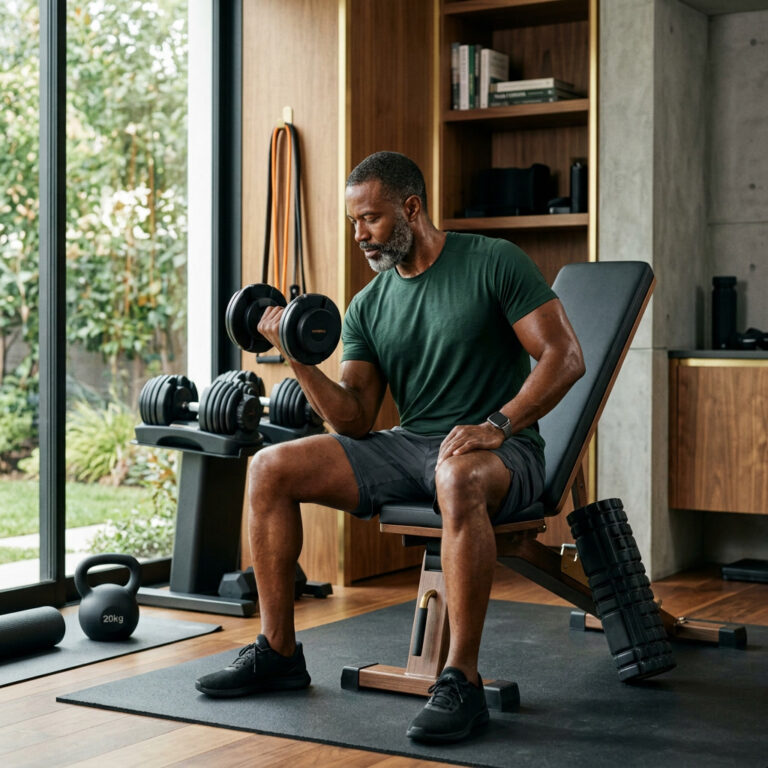
Home training removes commute time and scheduling friction. You can work out in 30 minutes without leaving your house. A basic setup with dumbbells, a bench, and a pull-up bar covers most training needs. Resistance bands and bodyweight exercises fill in the gaps.
The best choice depends on your personality and lifestyle. If you need the ritual of going somewhere to train, join a gym. If convenience matters most, build a home setup. Neither option is superior. The one you’ll actually use consistently is the right one. Choose the approach that removes the most barriers between you and regular training.
Cardio and Conditioning for Overall Fitness
Strength training builds muscle and power. Cardio improves your heart, lungs, and endurance. You need both for complete fitness. How much cardio depends on your goals and what you enjoy doing.
Low-intensity steady-state cardio like walking or easy cycling supports recovery. It increases blood flow without adding much fatigue. This type of cardio is easy to recover from and can be done frequently. Aim for 20 to 40 minutes several times per week.
High-intensity interval training delivers conditioning in less time. Short bursts of hard effort followed by rest periods challenge your cardiovascular system efficiently. Sprint intervals, bike sprints, or rowing sprints all work. Two or three sessions per week is plenty. More than that interferes with strength training recovery.
Don’t let cardio interfere with your primary goal. If building muscle and strength matters most, keep intense cardio minimal. If endurance is the priority, structure your week so cardio gets the freshest training slots. Balance matters but so does knowing what you’re actually chasing.
Frequently Asked Questions
How often should I train each week for results?
Three to five training sessions per week works well for most men. This provides enough stimulus to drive adaptation without overwhelming your recovery capacity. Beginners do fine with three full-body sessions. More advanced lifters might split their training across four or five days. Consistency over months matters more than how many days you cram into one week.
Can I build muscle without going to a gym?
Yes, you can build muscle at home with minimal equipment. Bodyweight exercises, resistance bands, and a basic dumbbell set create enough tension for growth. Progressive overload still applies. You need to make workouts harder over time by adding reps, sets, or resistance. Home training requires more creativity but delivers real results when done consistently.
How much protein do I actually need for fitness?
Aim for roughly one gram of protein per pound of body weight daily. A 180-pound man should target around 180 grams of protein spread across meals. This supports muscle repair and growth after training. You can go slightly lower and still make progress. Going much higher doesn’t provide additional benefits for most people.
What should I do if I miss a workout?
Just resume your normal schedule with the next planned session. Don’t try to make up missed workouts by doubling up later. One missed session won’t ruin your progress. Missing three weeks in a row will. Get back on track immediately without guilt or overcompensation.
How long does it take to see fitness results?
You’ll feel stronger and more energetic within two to three weeks. Visible muscle changes take six to eight weeks for most men. Others will notice around the three-month mark. Progress depends on training consistency, nutrition quality, sleep, and starting point. Stay patient and trust the process.
Pick one change from this article and start applying it this week.